01
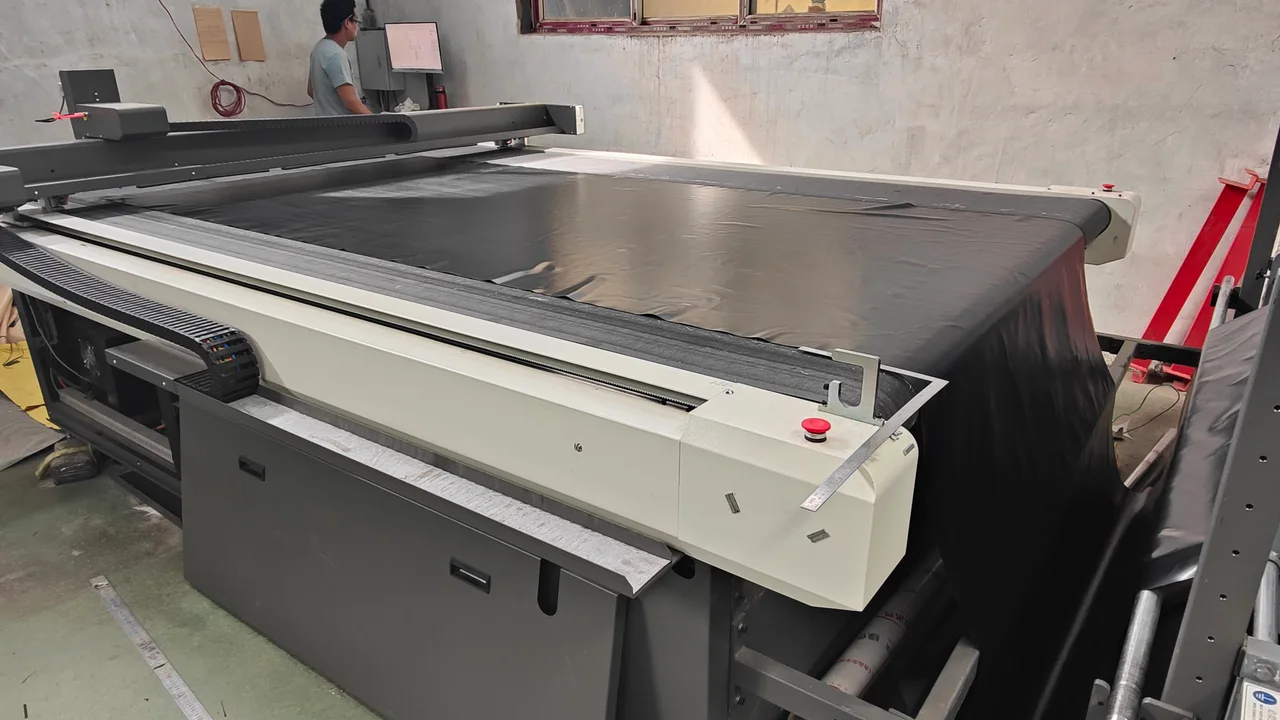
Panel preparation
Use the approved dimensions and panel definition to prepare coated material for assembly.
FOR BRANDS, WHOLESALERS & RETAILERS
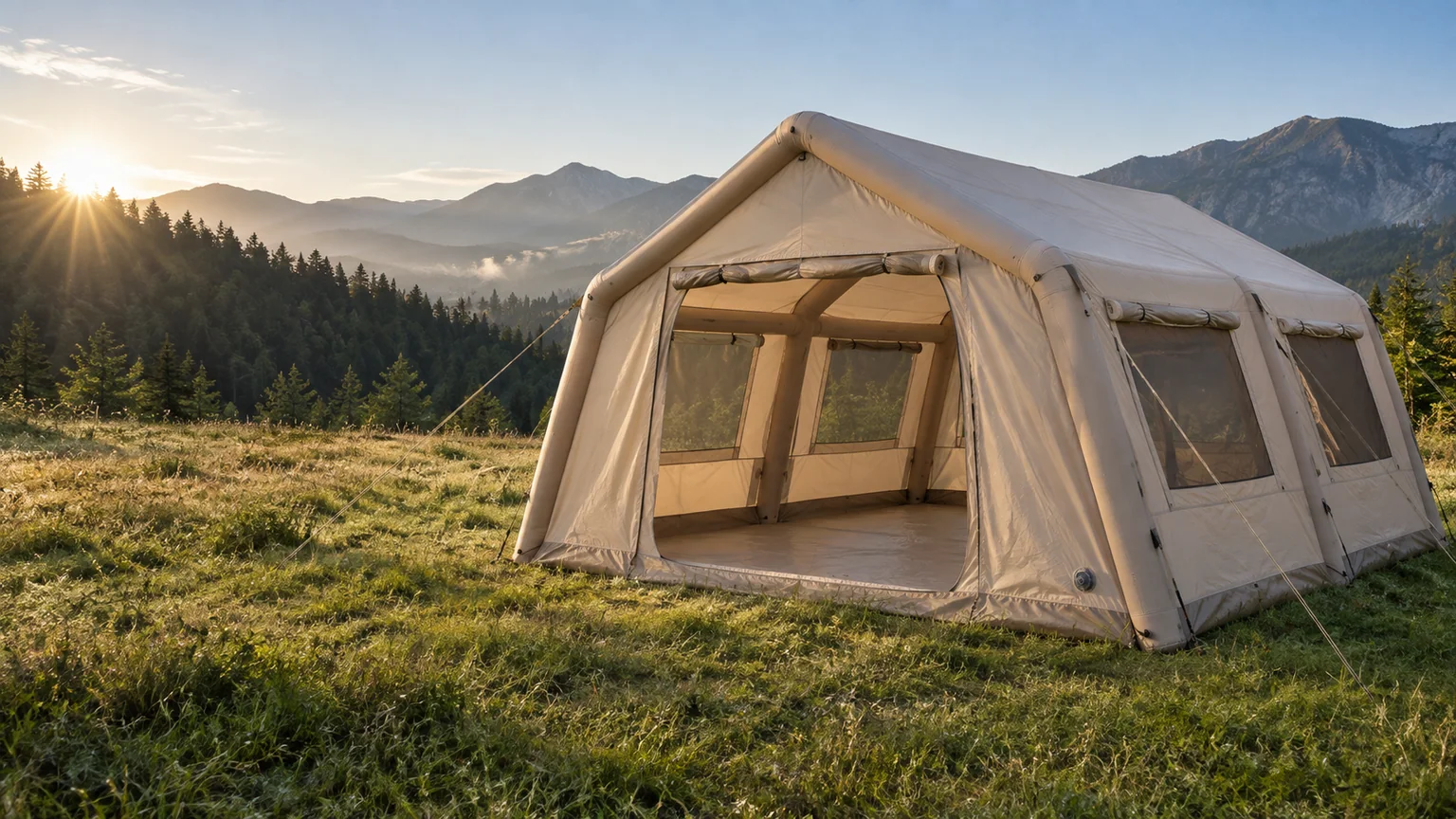
Source inflatable camping tents directly from the factory. Bring an existing model, drawing or product brief to develop the dimensions, layout, fabric and air-beam structure for your market.
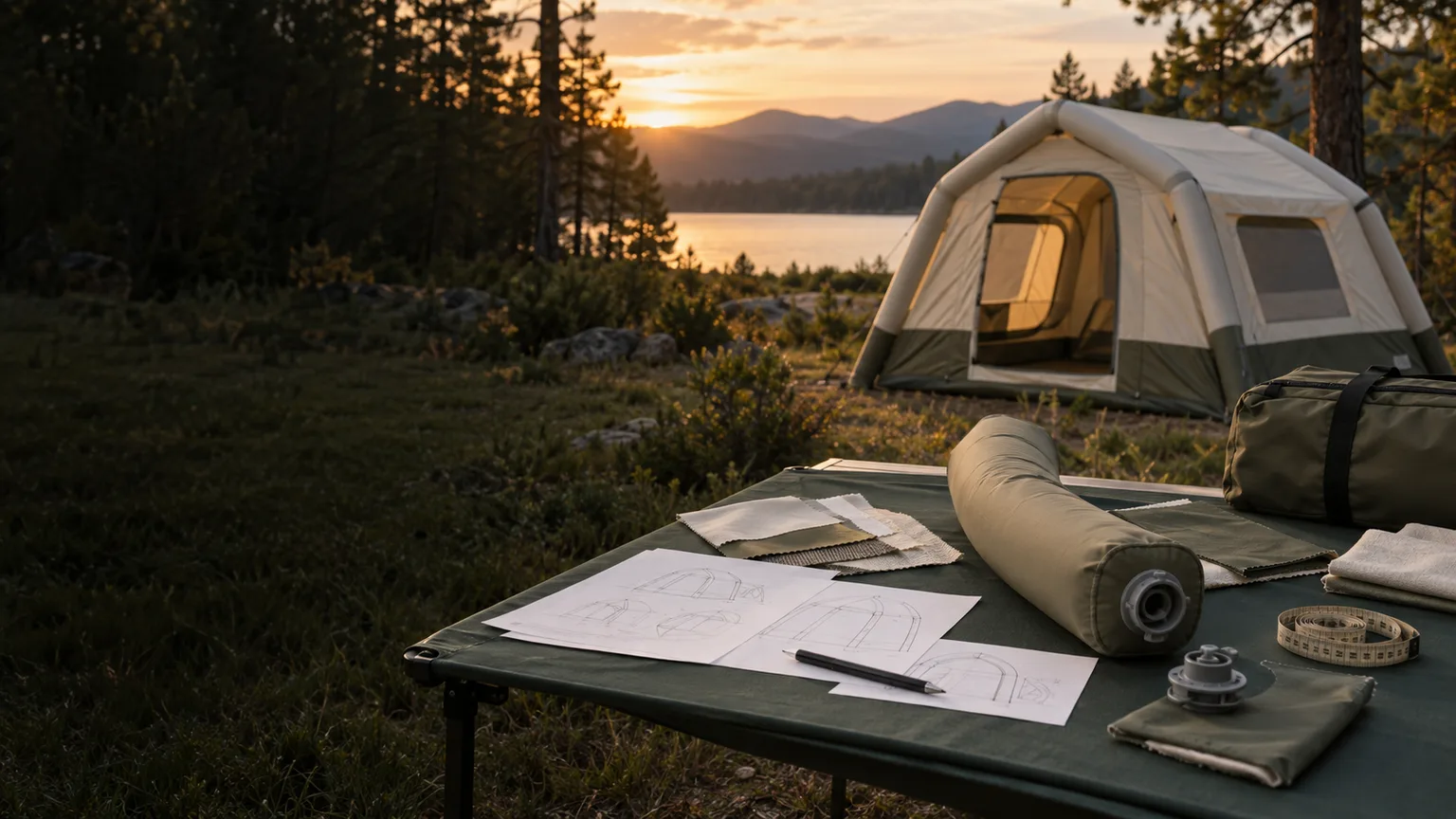
Illustrative design concept, not a photographed ASEN model. Final configuration is confirmed through sampling.
CUSTOMIZATION
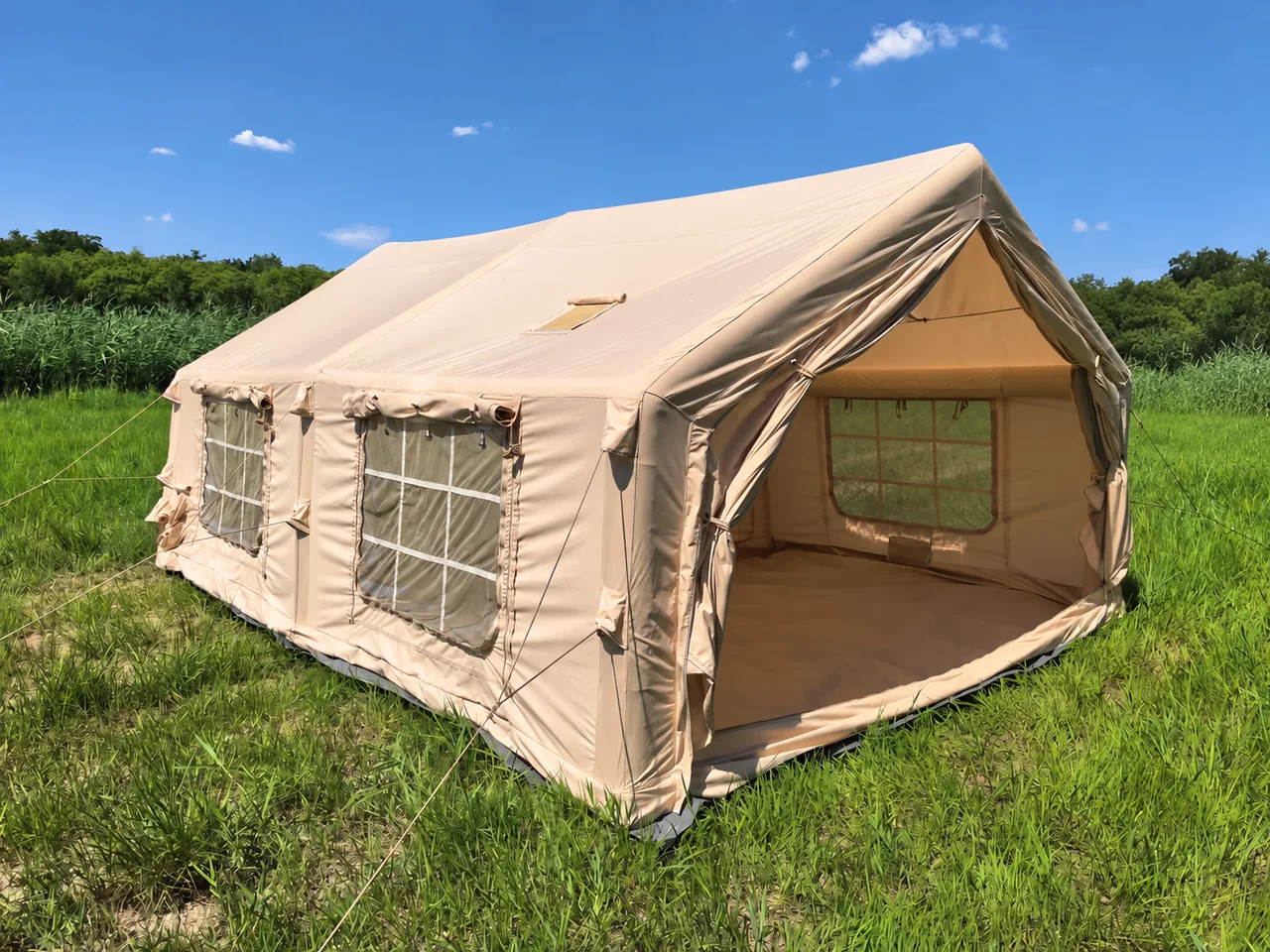
Start from the closest workable format, define the changes your market needs, then use the physical sample to confirm the result.
Set the target length, width, height and usable space around your market position.
Define entrances, windows, circulation and optional divided zones for the intended use.
Review actual swatches, colour, floor and panel requirements before the sample is made.
Develop tube geometry, junctions, valves, sleeves and service access with the air-beam maker.
WHOLESALE & PRIVATE-LABEL CAMPING TENTS
Whether you supply dealers, develop an outdoor brand or sell through retail stores, begin with the model mix and the requirements of your destination market.
Compare cabin and family air tents or inflatable Majlis formats. For a full model-mix and packed-set brief, see the wholesale buyer guide. Availability, customization and packing are confirmed per order.
Request a Bulk QuotationDEVELOPMENT INPUTS
A reference picture can start the conversation. A quotation and sample plan need the requested differences, quantity and commercial target.
CUSTOM INFLATABLE CAMPING TENTS
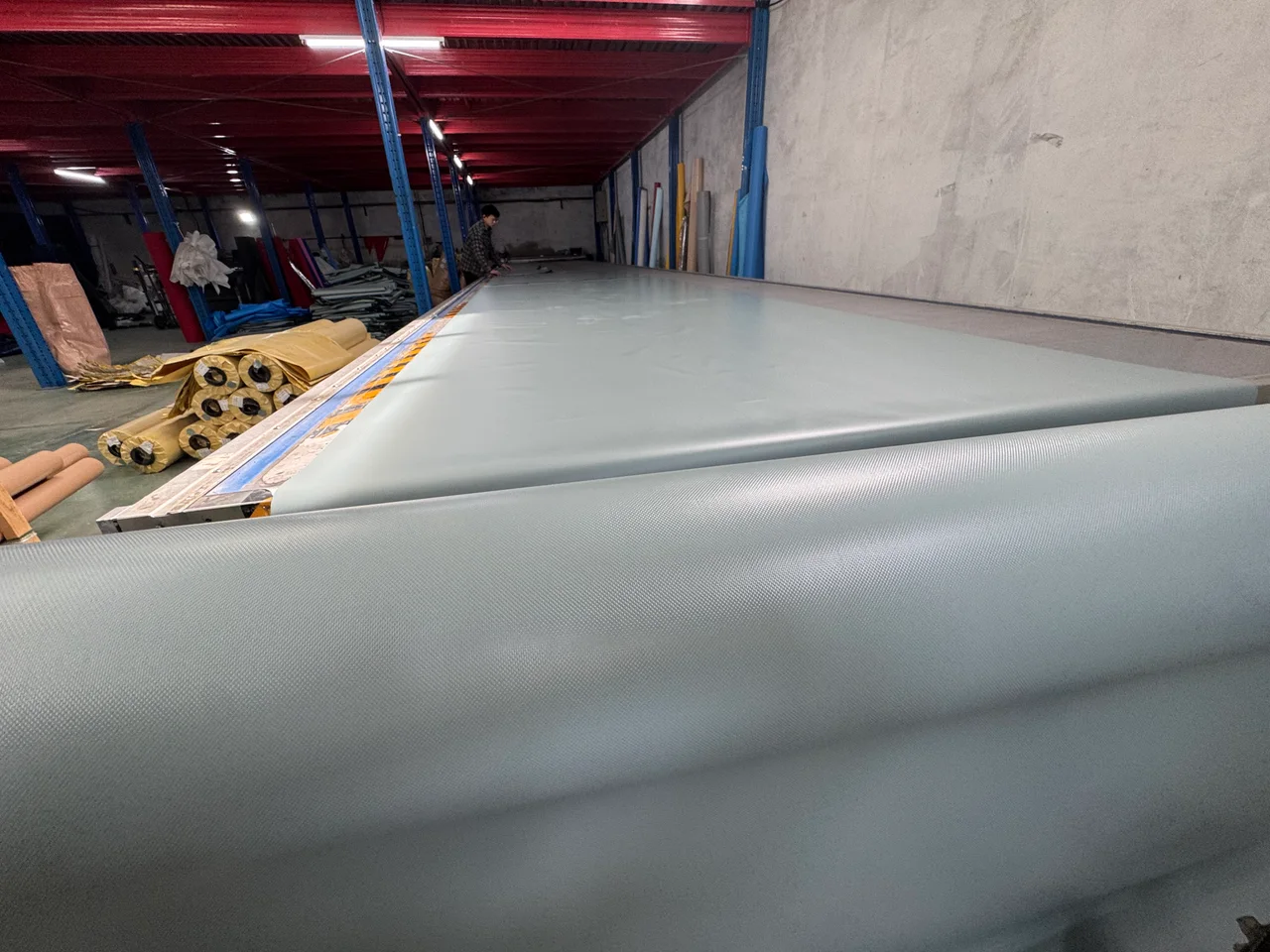
A reference model makes the first OEM discussion concrete. Each tent has its own specification; materials or dimensions from one model do not automatically apply to another.
3.6 x 2.5 x 2.36 m baseline with a PVC air tube and mesh openings.
A compact cabin-style starting point for a camping range.
See model details360 x 505 x 236 cm baseline with a removable partition.
A larger starting point when room division and circulation matter.
See model detailsOpen-front baseline with a visible inflatable frame, low side openings and roof-light panels.
A lodge starting point for campsites and outdoor brands planning guest space.
See model detailsThree produced sizes with model-specific layouts and openings.
A regional starting point for seating-led or divided interiors.
See model detailsSAMPLE DEVELOPMENT
Sample development is normally 7-15 days after the configuration, cost, scope and start date are agreed.
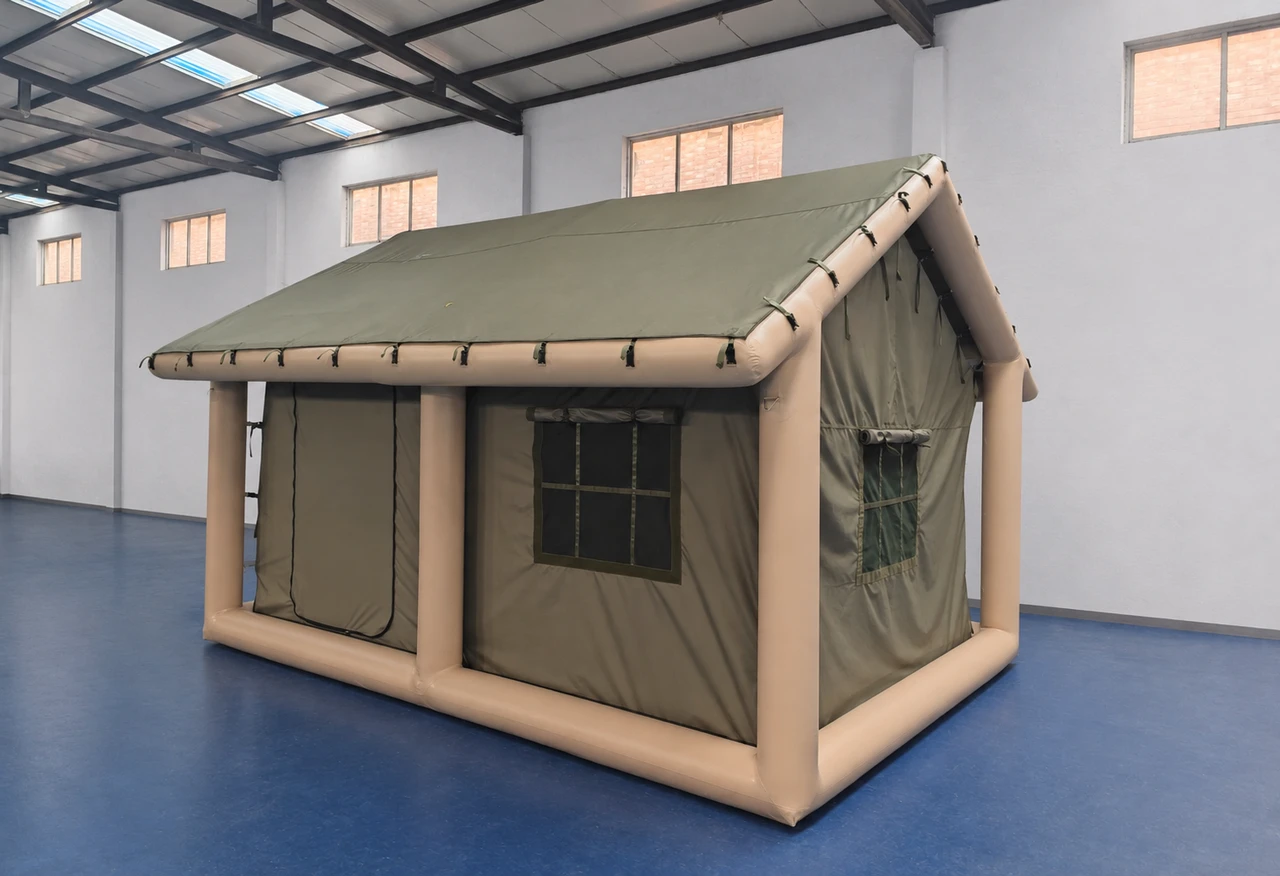
Use the setup to review exterior shape, openings and requested changes. The final approval scope is agreed for each project.
Target market, product requirements and estimated quantity.
Configuration, feasibility, sample cost and timing.
Assess the agreed requirements and record revisions.
Approve the specification, quantity and production timing.
INSIDE THE WORKSHOP
These ASEN workshop images show panel preparation, in-house air-beam fabrication and component details.
Use the approved dimensions and panel definition to prepare coated material for assembly.
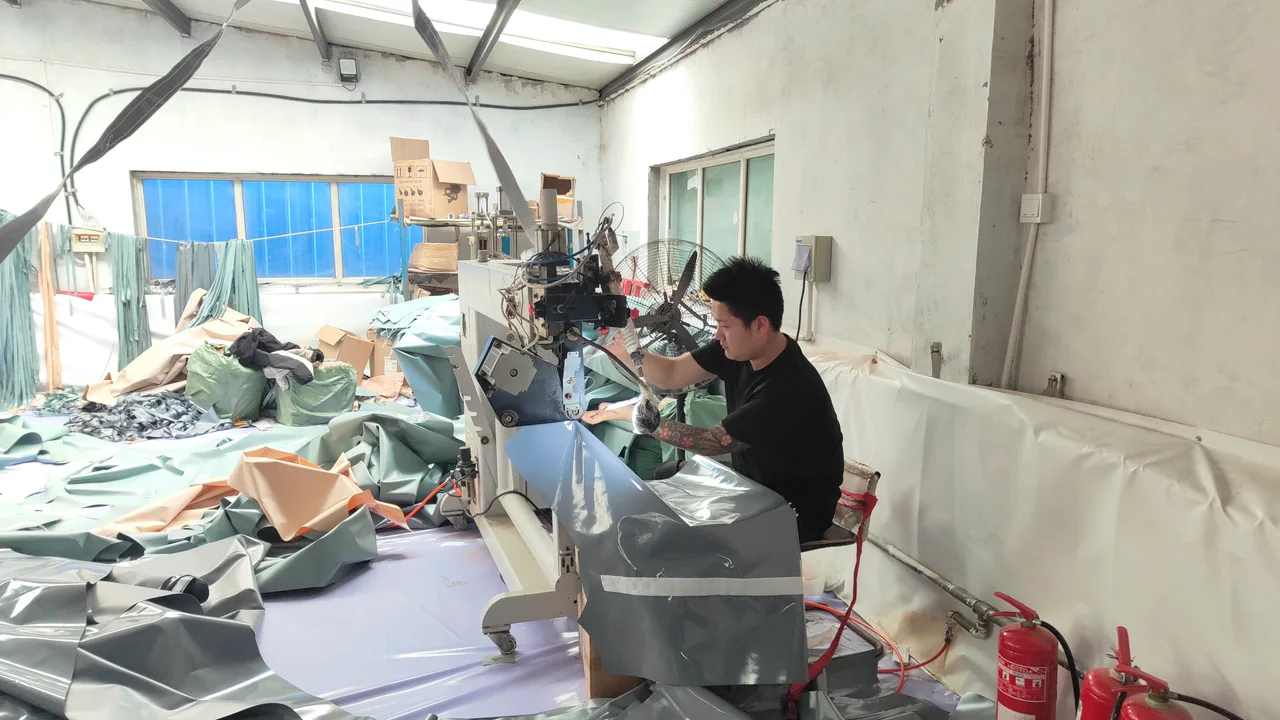
ASEN produces air beams in-house. Material, geometry, valves and service access are developed for the selected model.
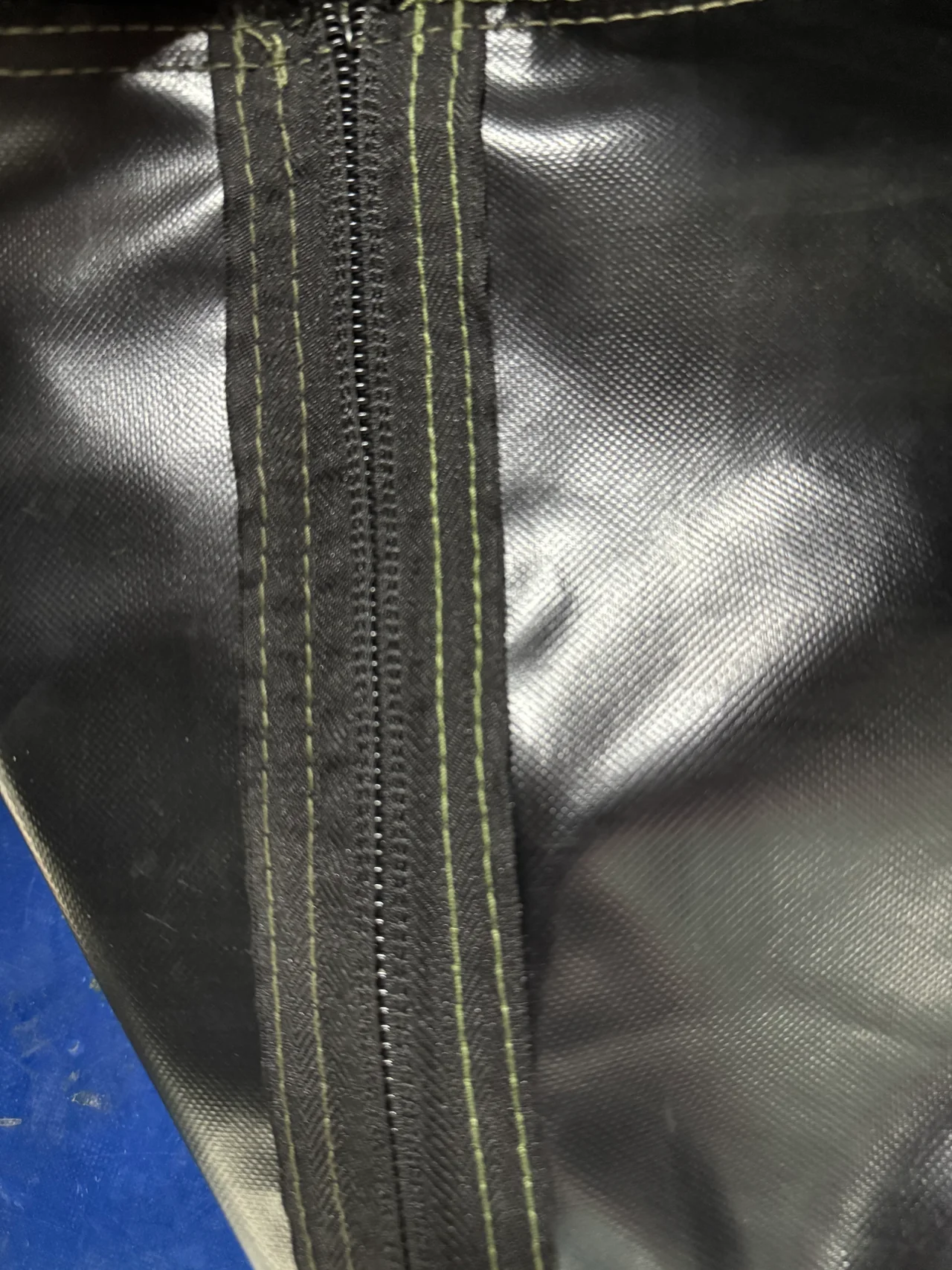
Check zipper position, stitch lines and material finish against the final sample.
ONE APPROVED SPECIFICATION
The sample becomes repeatable when purchasing, quality, marketing and production work from the same final definition.
In-house air beams. ASEN produces air beams and has high-frequency welding and heat-bonding equipment. Project-specific process and inspection requirements are confirmed separately.
Discuss Your ProjectTECHNICAL
COMMERCIAL
BEFORE YOUR INQUIRY
ASEN CAMPING is based in Tianjin, China. Overseas brands, wholesalers and retailers can share their destination country, target model, requested changes and estimated quantity to discuss a model-specific sample and quotation.
Yes. Share your sales channel, destination country, selected models and estimated quantity by model. The starting MOQ is 50 tents; mixed-model combinations are reviewed before quotation. Branding, accessories and packaging are agreed for your order rather than assumed to be identical across models.
Include the destination country and port, quantity split, required delivery date and any testing or labelling requirements. Ask for model-specific packed dimensions, weight, accessories, sample scope and the delivery terms to be stated in the quotation. Market-specific compliance and transport costs must be checked for the agreed configuration.
Dimensions, room layout, openings, fabrics, colours, air-beam structure, branding, accessories and packing can be discussed. Feasibility and the final specification are confirmed for the selected model.
Yes. ASEN produces air beams in-house. The workshop photographs show panel preparation, air-beam fabrication and component work. Air-system design, materials and inspection points are agreed for the tent you are sourcing.
Check the exact model's air-beam layout, valves and setup photographs, then confirm the frame structure in its sample specification. An interior photograph of a different pole-frame tent cannot verify an inflatable model. Any rigid accessories or secondary supports should be identified separately for the configuration you order.
Yes. Sample development is normally 7-15 days after the configuration, cost, scope and start date are agreed.
The current starting MOQ is 50 tents. Mixed-model combinations are reviewed by product before quotation.
Confirm the model revision, dimensions, room plan, materials, air-beam arrangement, branding, accessories, packing and the inspection points relevant to your order. Use the physical setup to check shape and openings, then record changes against the final sample.
FROM PRODUCT BRIEF TO PHYSICAL SAMPLE
Share the closest model, target market, requested changes, estimated quantity and timing.
Discuss Your ProjectIllustrative design concept; confirm final materials, configuration and components through sampling.